Did you know that rosehips have 20 to 30 times more vitamin C compared to oranges?
Because of this exceptionally high vitamin C content, rosehip syrup was a traditional home remedy that was used to boost the immune system and ward off colds and fevers in autumn and winter.
Rosehips are the bright red fruits of wild rose bushes and one of the richest natural sources of vitamin C, containing significantly more than oranges by weight. This powerful antioxidant supports the immune system, helps the body fight off colds, and may reduce the duration of symptoms.
Traditionally, rosehips were gathered after the first frosts and made into a soothing syrup that preserves their vitamin content. Rosehip syrup can be taken by the spoonful or stirred into warm water or herbal teas to give a gentle boost during cold and flu season, offering both nourishment and comfort.
They are one of my favourite wild autumn berries, having a unique tart and tangy flavour profile with a hint of sweetness, making them perfect for syrups, tinctures, teas, and preserves.
Rosehips can be found on practically every country road or hedgerow in Ireland, from late summer through to late autumn. They are
Rosehips can be dried to make a tangy, nourishing herbal tea, simmered into syrups or jams, or infused in oils for soothing skin remedies.
However, the fibres around the seeds that are contained within the berry are an irritant so it is important that they are completely removed before ingesting. This can be done by hand after the hips are harvested or by thoroughly straining the final preparation.
that makes them perfect for syrups, teas, and jams
Read on to learn more about the benefits of rose hips including tips on identifying, harvesting and preparing them.
ROSEHIPS
Rosa canina
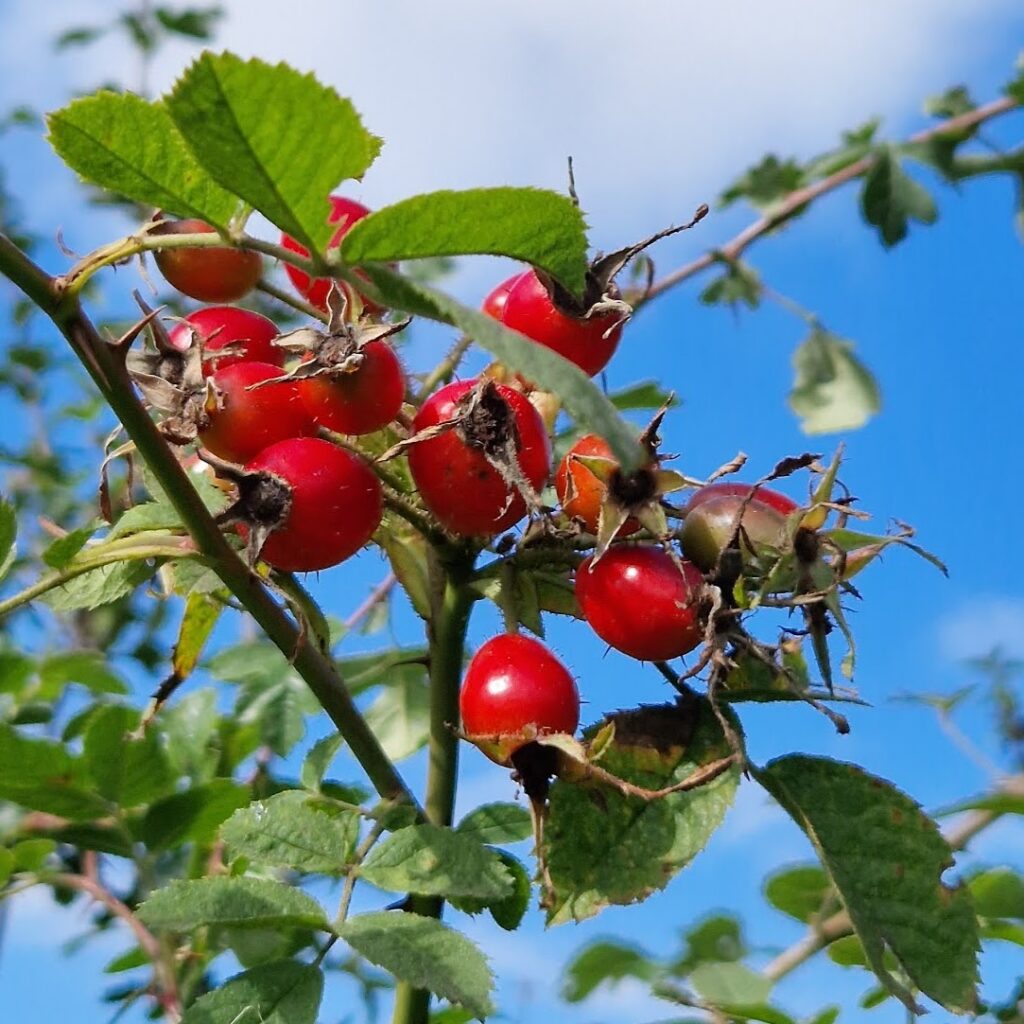
Rosehips can be found on practically every country road or hedgerow in Ireland, from late summer through to autumn.
They are exceptionally rich in vitamin C and rosehip syrup was a traditional home made remedy that was used to ward off colds and fevers in autumn and winter.
Rosehips can be dried to make a tangy, nourishing herbal tea, simmered into syrups or jams, or infused in oils for soothing skin remedies.
However, the fibres around the seeds that are contained within the berry are an irritant so it is important that they are completely removed before ingesting. This can be done by hand after the hips are harvested or by thoroughly straining the final preparation.
BLACKBERRIES
Rubus fructicosus
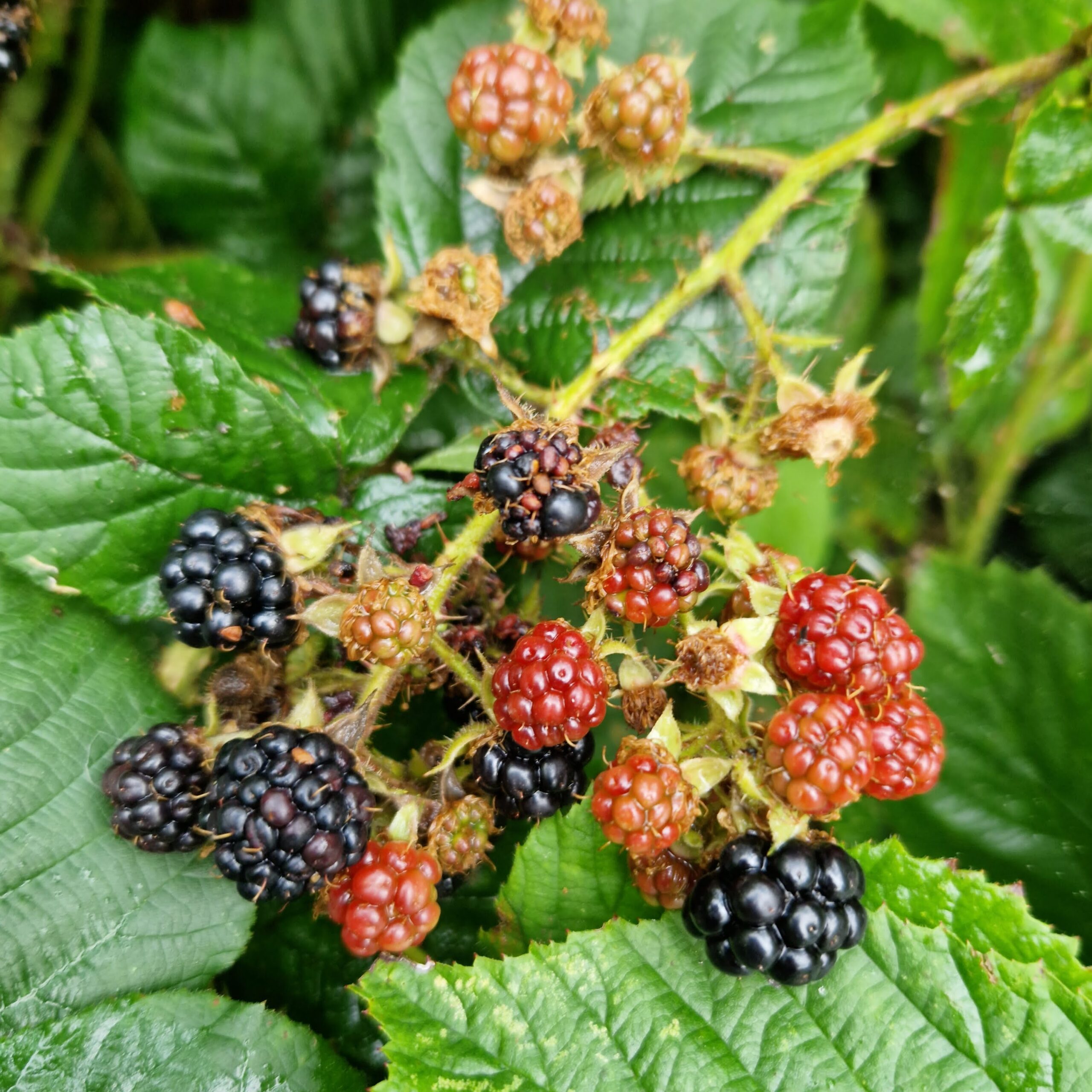
Blackberries are one of the most familiar and easily recognised wild fruits to forage.
The clusters of deep purple-black berries ripen from late summer into autumn and can be found growing abundantly in hedgerows, country lanes, parks and many urban areas.
Rich in vitamin C, fibre and antioxidants, they are traditionally used to support the immune system, aid digestion, soothe sore throats and reduce inflammation.
Delicious eaten straight from the bramble, blackberries can also be used in tarts, crumbles, jams, syrups and cordials.
Over the years I have come up with many inventive and creative ways to use blackberries in sweet and savoury dishes, wild drinks and wild cocktails.
Click on the link below for some ideas and a recipe for making your own blackberry liqueur.
ELDERBERRIES
Sambucus nigra
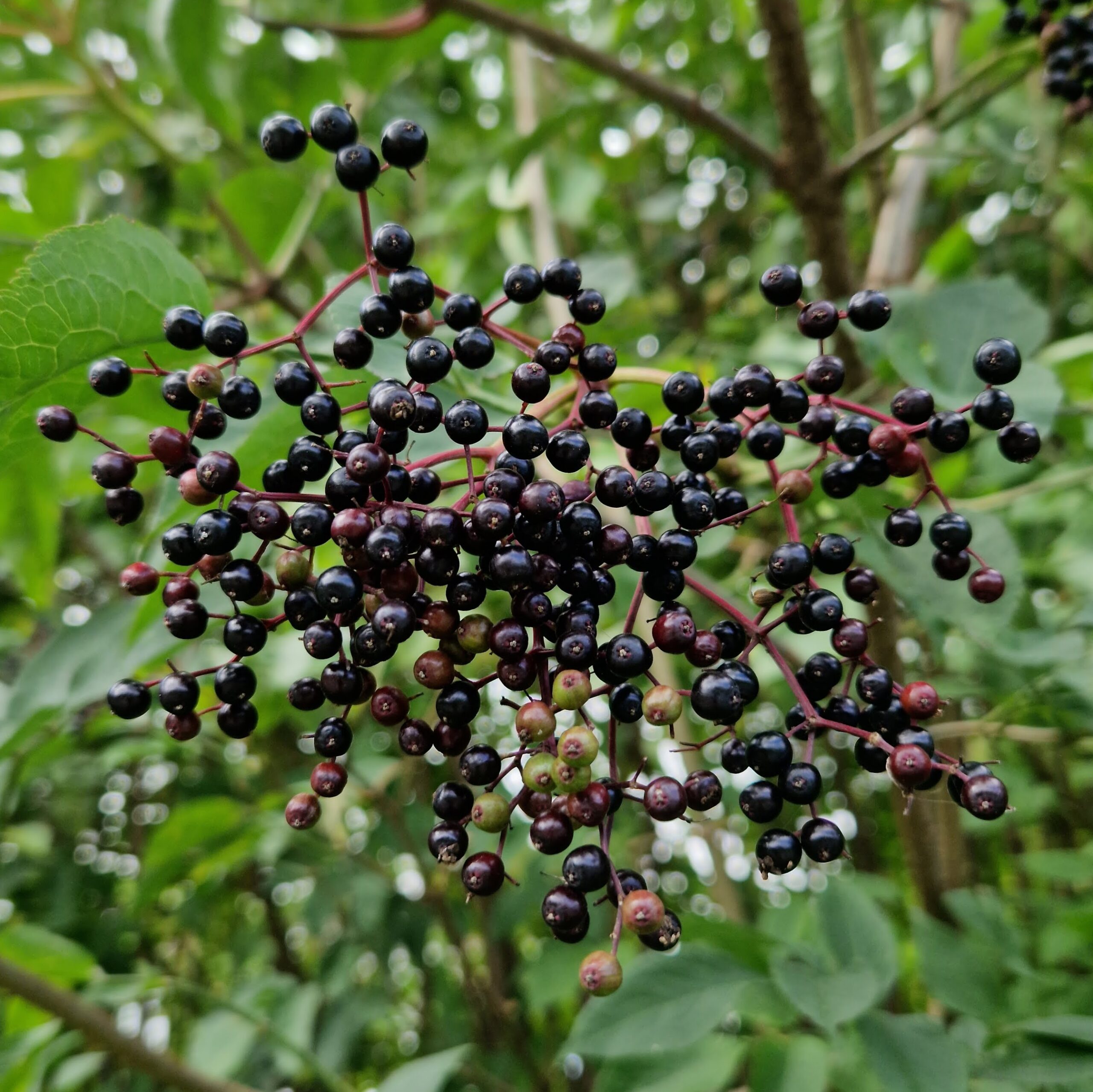
Elderberries grow in clusters of small, dark purple to almost black berries on the elder tree.
They can be found growing along hedgerows and country roads from late August to October. These little berries are rich in vitamin C, antioxidants, and flavonoids, and they are great for boosting our immune systems and warding off winter colds.
I often make a basic elderberry syrup and combine it with other native Irish herbs to make a very effective expectorant cough syrup.
Elderberry seeds are slightly toxic when raw but once cooked they can be safely enjoyed in many sweet and savoury dishes.
The berries also make a really good country wine that is rich and full bodied and was traditionally used as a tonic, due to its antiviral and anti-inflammatory properties.
ROSEHIPS
Rosa canina
Rosehips can be found on practically every country road or hedgerow in Ireland, from late summer through to autumn.
They are exceptionally rich in vitamin C and rosehip syrup was a traditional home made remedy that was used to ward off colds and fevers in autumn and winter.
Rosehips can be dried to make a tangy, nourishing herbal tea, simmered into syrups or jams, or infused in oils for soothing skin remedies.
However, the fibres around the seeds that are contained within the berry are an irritant so it is important that they are completely removed before ingesting. This can be done by hand after the hips are harvested or by thoroughly straining the final preparation.
HAWTHORN BERRIES
Crataegus monogyna
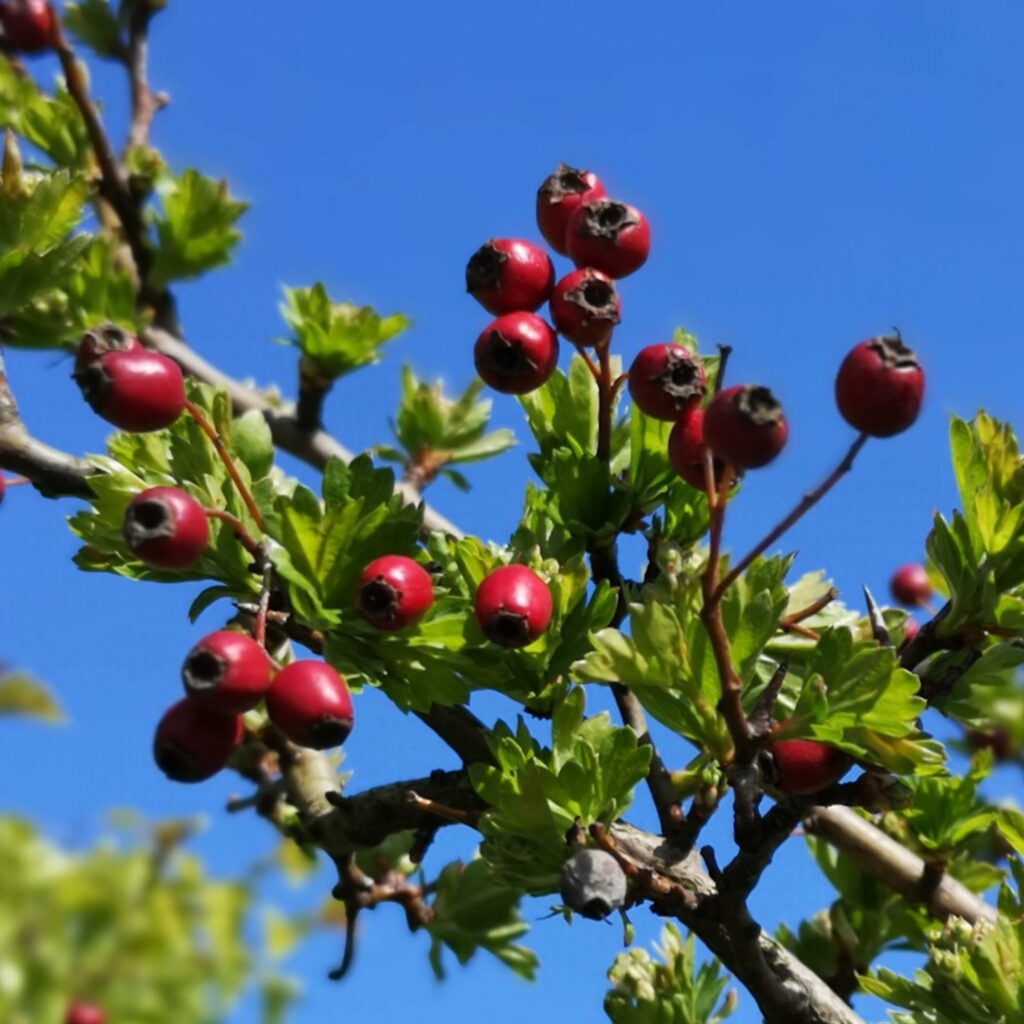
Hawthorn berries, or haws, are small, round red fruits that grow in clusters on the hawthorn tree. Traditionally valued for supporting heart health and circulation, haws are rich in antioxidants, flavonoids, and vitamin C.
They can be used to make jellies, chutneys, or ketchups, or prepared as a gentle herbal tea.
However, they should never be used by anyone with a serious heart condition or anyone who is on conventional heart related medication, without consultation with your health care professional.
SLOES
Prunus spinosa
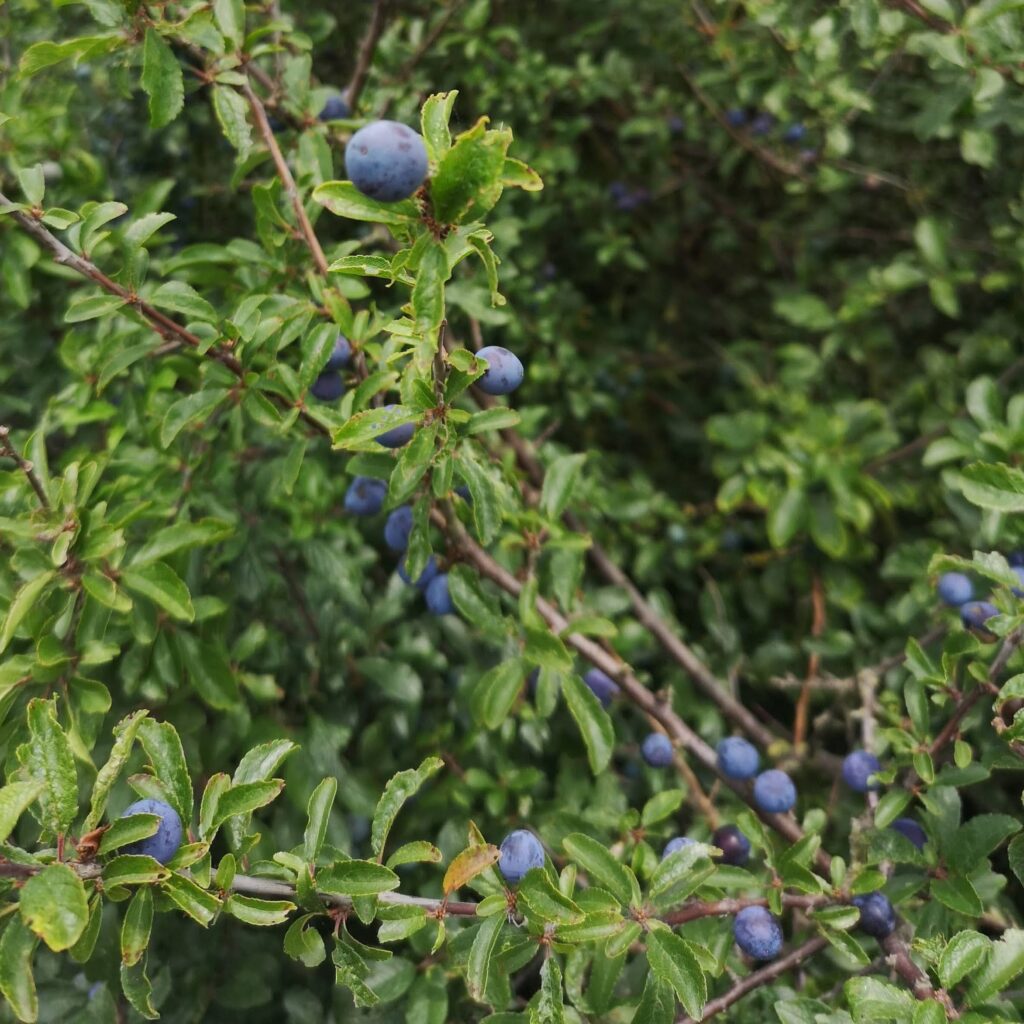
Sloe berries, or sloes, are the small, dark purple fruits of the blackthorn shrub, which is easily identified by its thorny branches, small oval leaves, and white blossom in early spring.
The berries ripen in hedgerows, field margins, and woodland edges from autumn onwards. Naturally high in vitamin C and antioxidants, sloes have been valued for their astringent, immune-supporting, and digestive benefits.
Too sharp to eat raw, they are best used in traditional recipes such as sloe gin, jam or syrup.
SEA BUCKTHORN
Hippophae rhamnoides
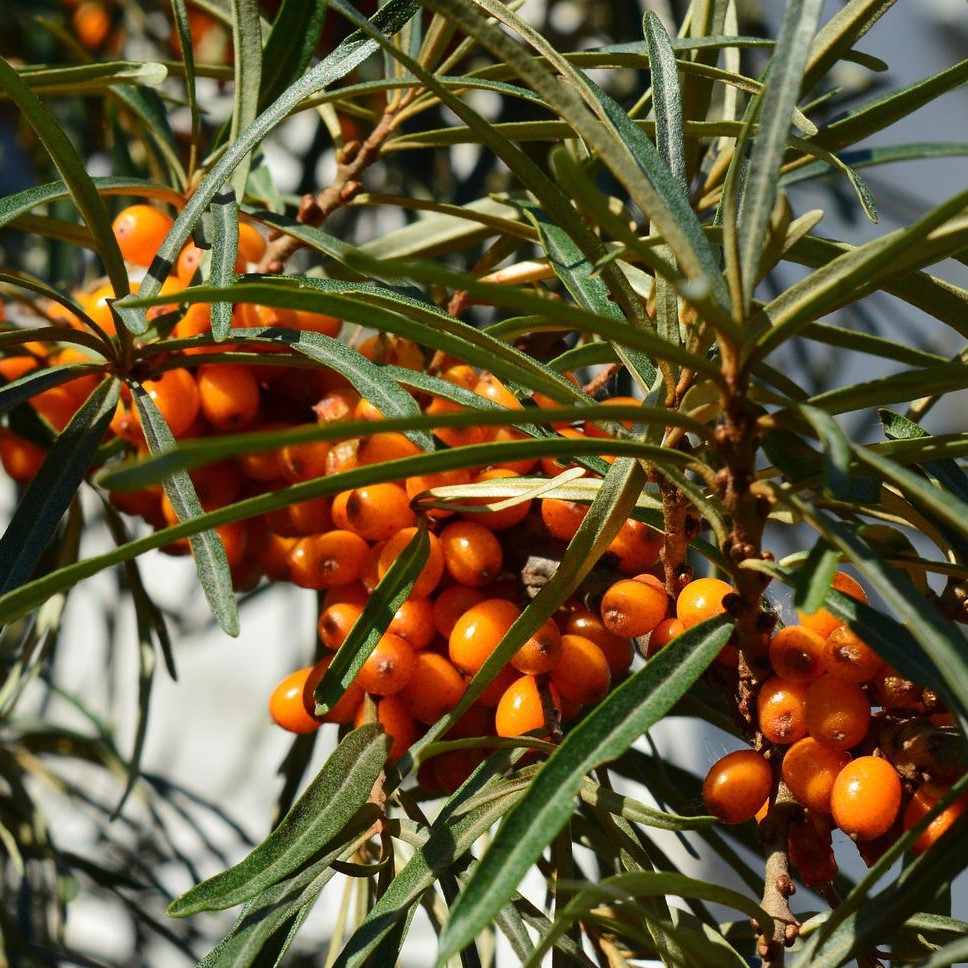
Sea buckthorn berries are striking bright orange fruits that grow in dense clusters along the thorny branches of the sea buckthorn shrub.
Sea buckthorn can be found growing in coastal areas, sand dunes, and scrublands.
The berries are rich in vitamin C and antioxidants, making them highly valued for supporting our immune systems and our skin health.
Although very tart when eaten raw, they can be transformed into juices, syrups, jams, or sauces, and can also be used in traditional herbal remedies.
IMPORTANT WARNING
This information is for educational purposes only and is not intended to replace the advice of a qualified nutritionist or health practitioner.
Never use any wild plant if you are pregnant, have a serious illness or medical condition or are on any medication, without first consulting your medical team.
It is the responsibility of the reader to ensure that any wild plants are 100% correctly identified. If in doubt never use any wild plant for food or medicine.
LEARN MORE
If you would like to learn more about safe and sustainable foraging, and using wild herbs for food and medicine, click on the links below to check out my in person and online workshops.