RECIPE | WILD GARLIC PESTO
There are a few different varieties of wild garlic growing in Ireland. Allium ursinum, commonly known as Ramsons, is the one most often used in cooking.
Wild garlic can be found in shaded woodland areas and can be identified by its pungent garlic smell. It is at its best in early spring, before it begins to flower. Because it has a relatively short season, this pesto recipe is a great way to preserve it for use throughout the year.
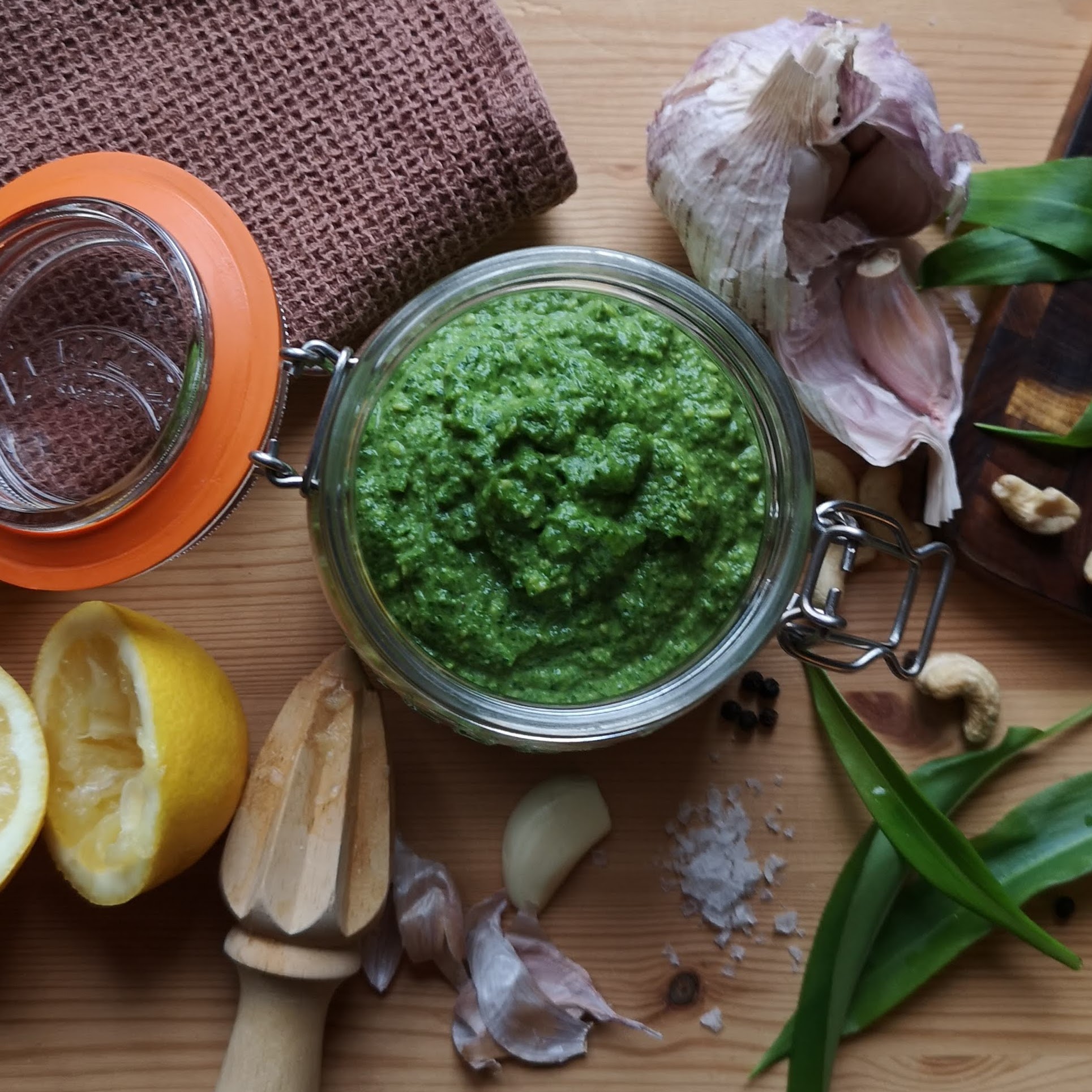
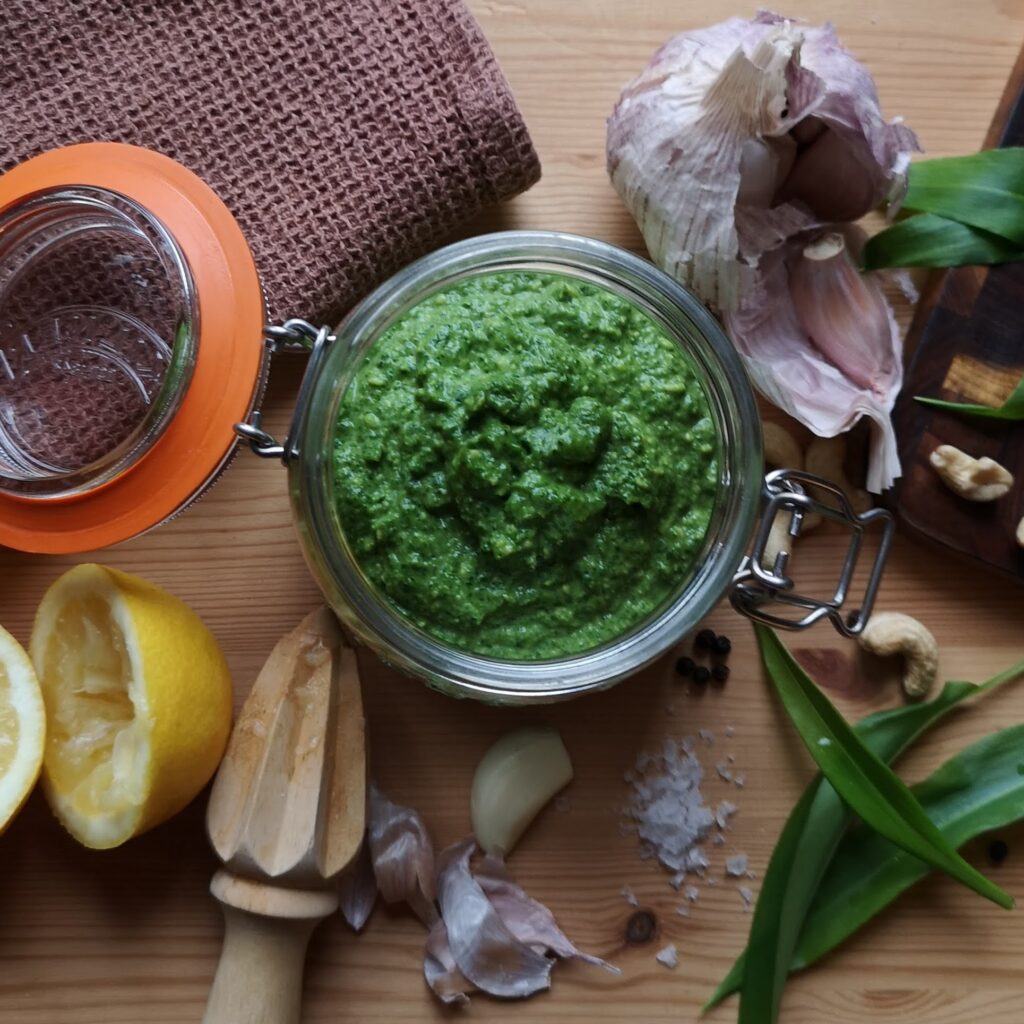
WILD GARLIC PESTO
INGREDIENTS
75g cashew nuts
225ml extra virgin olive oil (approx)
150g wild garlic leaves
50g grated Parmesan cheese (optional)
Fresh lemon juice to taste
Sea salt and freshly ground black pepper
METHOD
Blitz the nuts in a food processor. Leave them as smooth or as textured as you wish.
Add the wild garlic leaves and blitz again. You may need to add a small amount of the olive oil at this stage. Continue to gradually add the olive oil until the pesto reaches your desired consistency.
Add the cheese (if using) and a squeeze of fresh lemon juice and blitz again. Taste and add seasoning and extra lemon juice as required.
Pour into cooled sterilized jars. Top with a layer of olive oil which will aid with preservation. Once opened, store in the fridge and use within one week.
TO SERVE
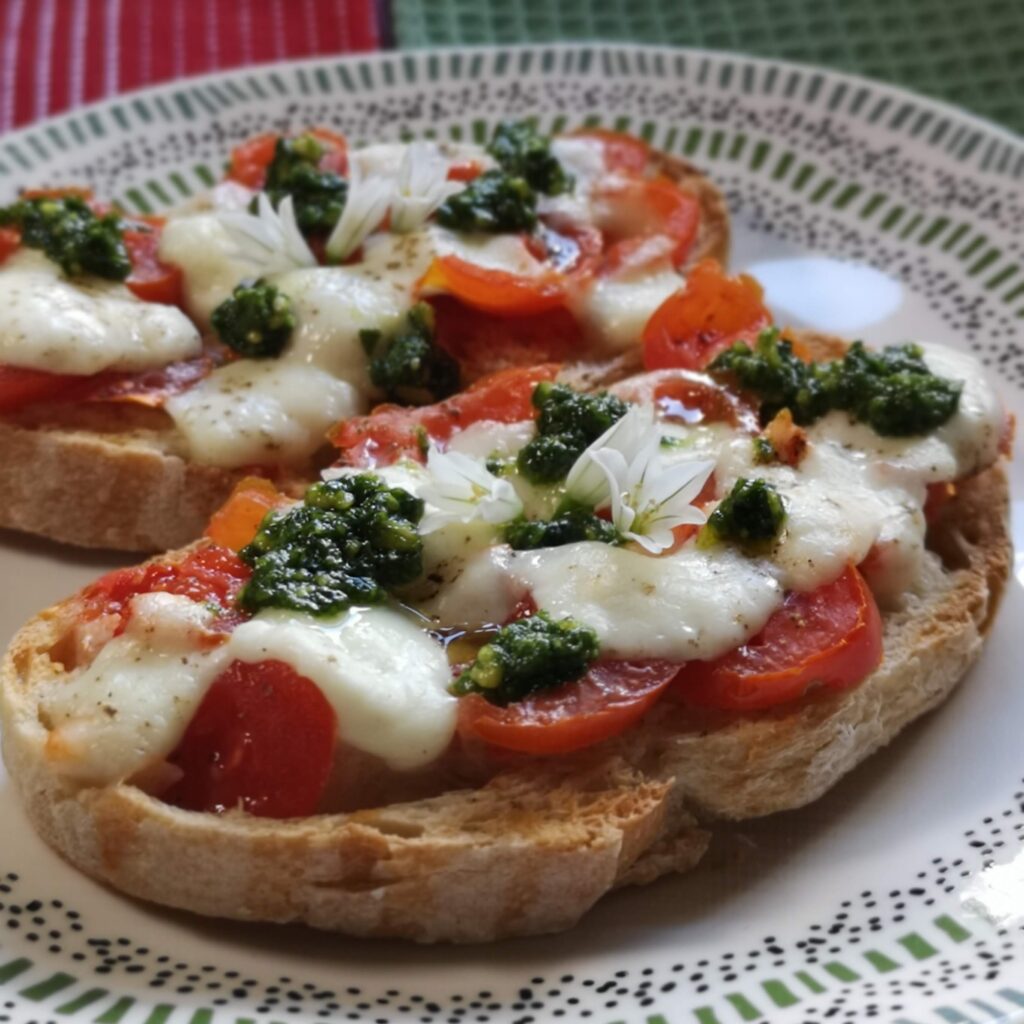
Fairly thick is good for dips, spreading on bread, making bruschetta, and adding to pasta and pizzas. Add more oil to create a thinner consistency if you wish to use the pesto as a drizzle, garnish or salad dressing.
VARIATIONS
Experiment by replacing some of the wild garlic leaves with other herbs. Any of the soft, green leafy ones such as basil, parsley, mint or rocket work well. You can experiment with the nuts, replacing cashew nuts with pine nuts, almonds, walnuts or hazelnuts. The Parmesan cheese can be replaced with other hard cheeses such as Pecorino, Grana Padano or Comté.
NOTE
If you wish to preserve your pesto for a long period of time, it is important that the leaves are totally dry before you add them to the oil. Herbs for preserving are best harvested on a dry, sunny morning. If you must wash them, dry them gently in a clean tea towel or kitchen paper, and air dry for an hour or two, turning regularly, before use.
Read my Guide to Spring Foraging for some tips on how to identify the two common varieties of wild garlic that grow in Ireland.
LEARN MORE
If you would like to learn more about how to safely identify wild herbs and use them to enhance your health, by making tasty drinks, wild food dishes and simple herbal remedies, click on the links below to check out my in person and online foraging workshops.
Introduction to Foraging Workshop
IMPORTANT WARNING
This information is for educational purposes only and is not intended to replace the advice of a qualified nutritionist or health practitioner.
Never use any wild plant if you are pregnant, have a serious illness or medical condition or are on any medication, without first consulting your medical team.
It is the responsibility of the reader to ensure that any wild plants are 100% correctly identified. If in doubt never use any wild plant for food or medicine.